Reporting & Publication
From structured data to scientific dissemination without leaving the platform
The Publication module covers the entire journey from first draft to live web publication. No Word files. No email threads. No lost versions: every author, reviewer, and editor works on the same document.
One workflow, draft to online
Each publication type follows its own dedicated workflow, with validation steps that guarantee procedural and editorial consistency.
Six clear stages.
Draft → Ready for review → In review → In editing → Ready to publish → Published. Everyone sees where each document stands, at any moment.

Three roles, clean handoffs.
Authors write and submit. Organization administrators review and validate internally. Publication administrators (the editorial body) oversee the final process. Requests for changes travel back with comments attached, never by email.

Nothing gets lost.
Every version, change, and validation is recorded. Consult the previous value of any field at any time, and restore it if needed. The workflow history documents every validation step.
An editor built for scientific writing
Authors focus on content; the editor handles the rest.

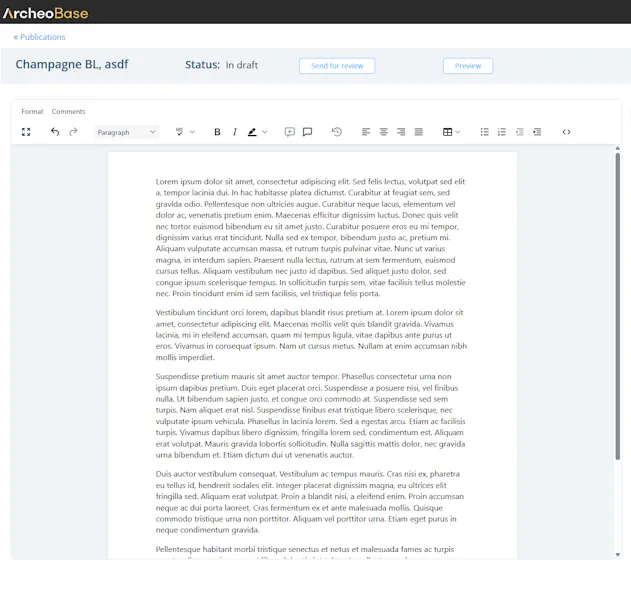
Full scientific toolkit: styles, footnotes, tables, lists, comments anchored to specific words for review discussions.

A spell-checker that learns your vocabulary. Right-click any specialist term to add it to the dictionary. It grows with your team's archaeological terminology.

Auto-save every 30 seconds. Accidental page close or dead battery: the latest version is recovered on reopening.

References, formatted for you. Enter them manually or import from BibTeX; citations integrate into the text and format automatically to the rules of each publication type.
Structured by publication type
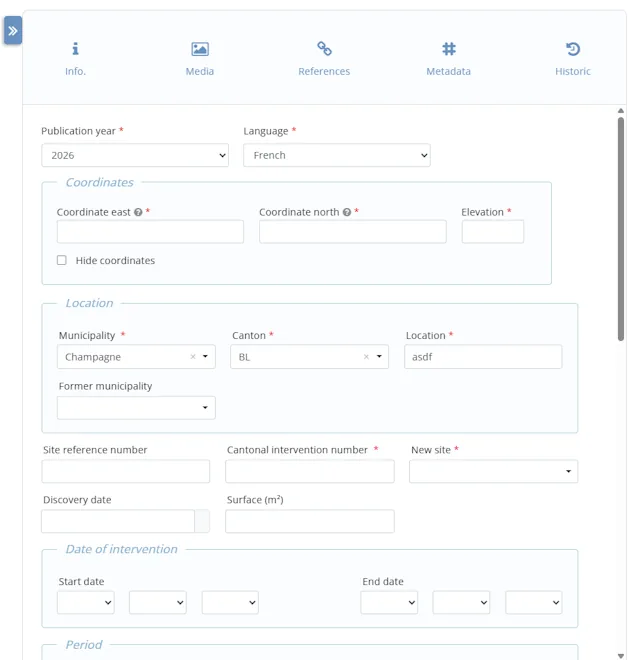
Every publication type (chronicle, excavation report, or scientific article) has a dedicated form defining its required fields, controlled vocabularies, and displayed metadata.

Editorial consistency by design.
Title, authors, period, locations: you define what's required, and every publication of that type follows. The structured fields then power advanced filtering and search across the entire corpus.

Illustrations, handled properly.
Batch import, captions and image credits, and drag-to-reorder. The order you set is the order readers see. Images can sit within the text, in galleries, or at the end of the article.
Publish to the web, under your identity

A live portal, instantly.
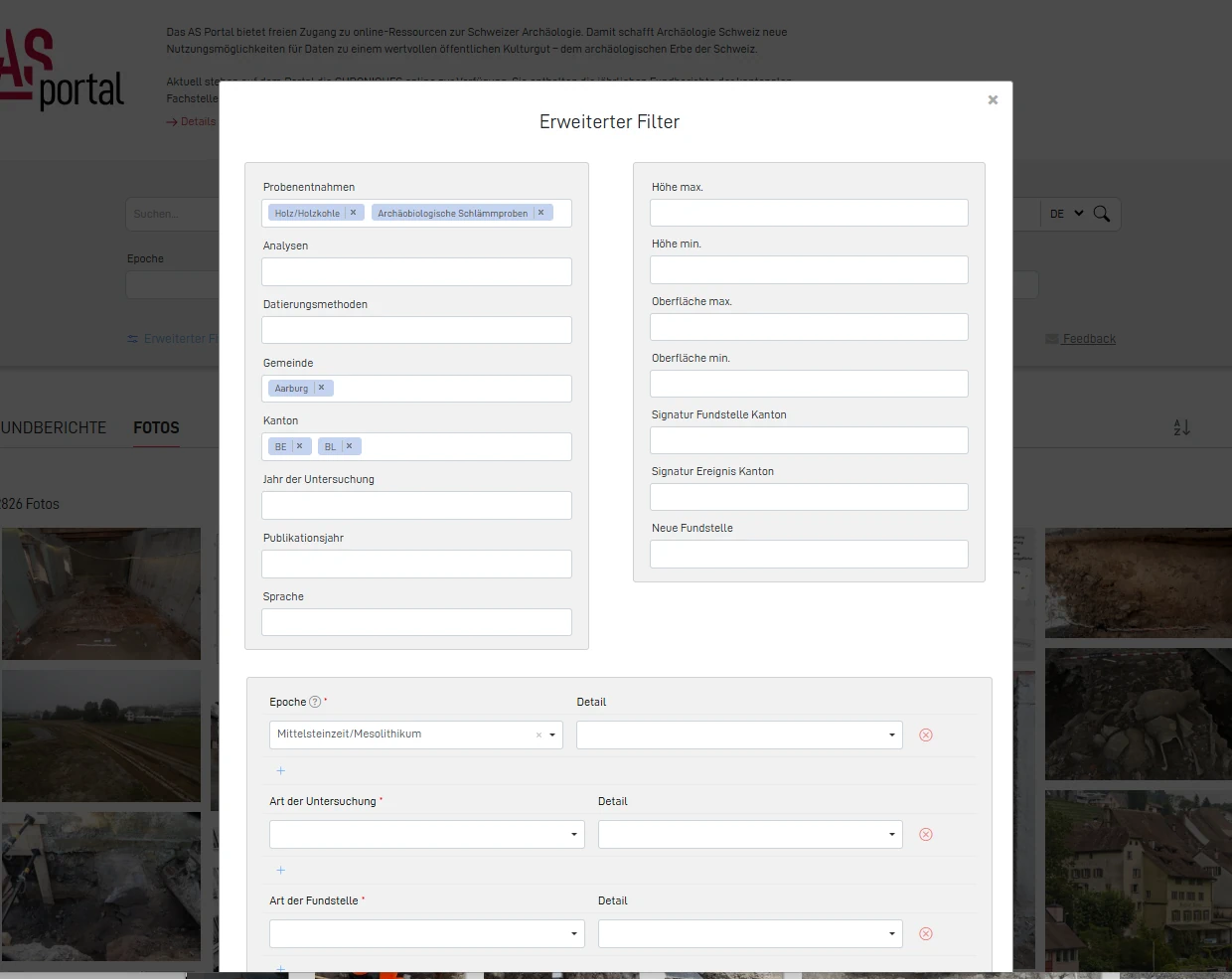
Validated content is automatically published to a web portal with advanced filters on every structured field.
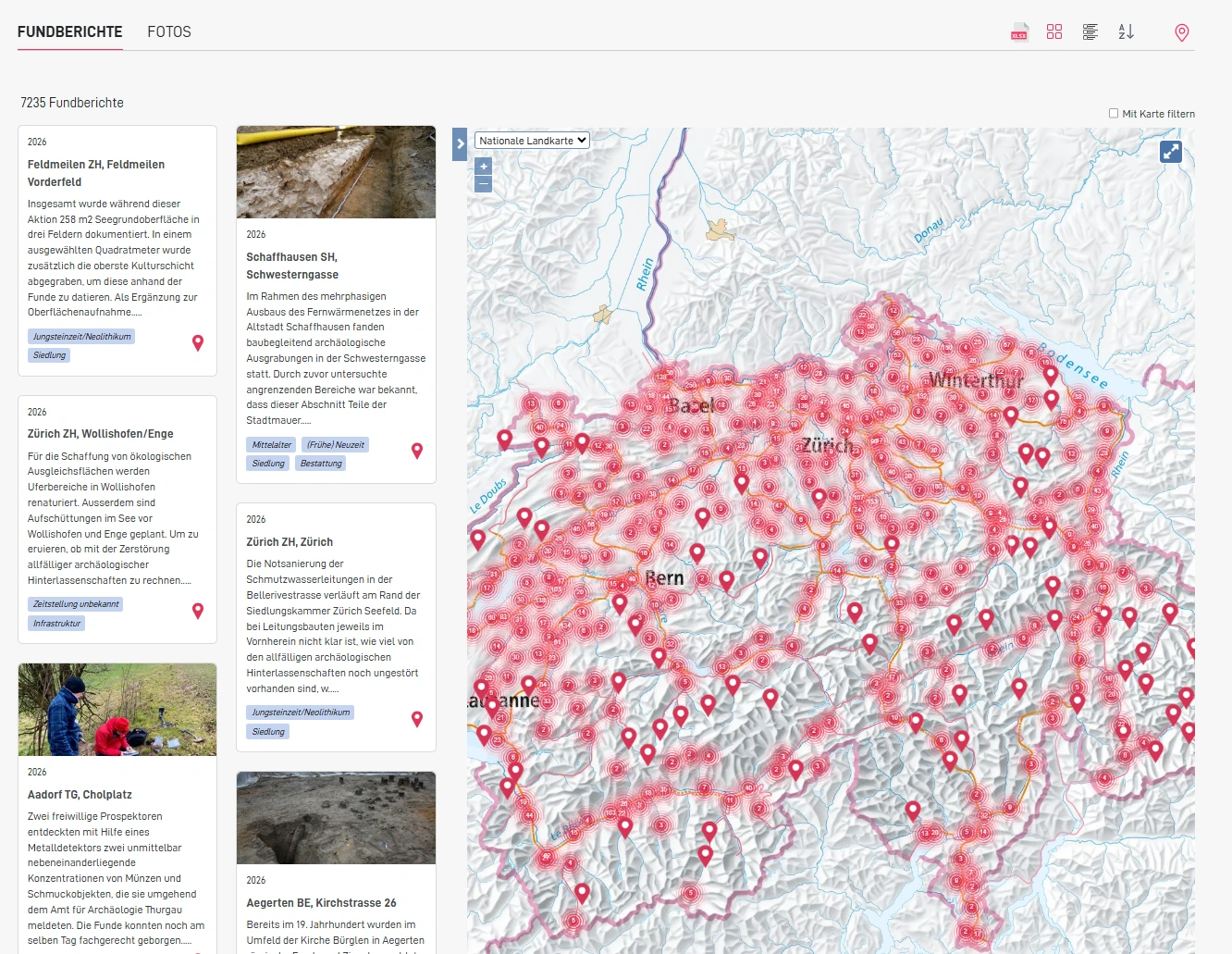

Internal, public, or both.
Publish to your intranet for internal readers, to the open web for the public, or both at once: keep the full corpus internal while releasing selected articles online. You decide what goes where, publication by publication.
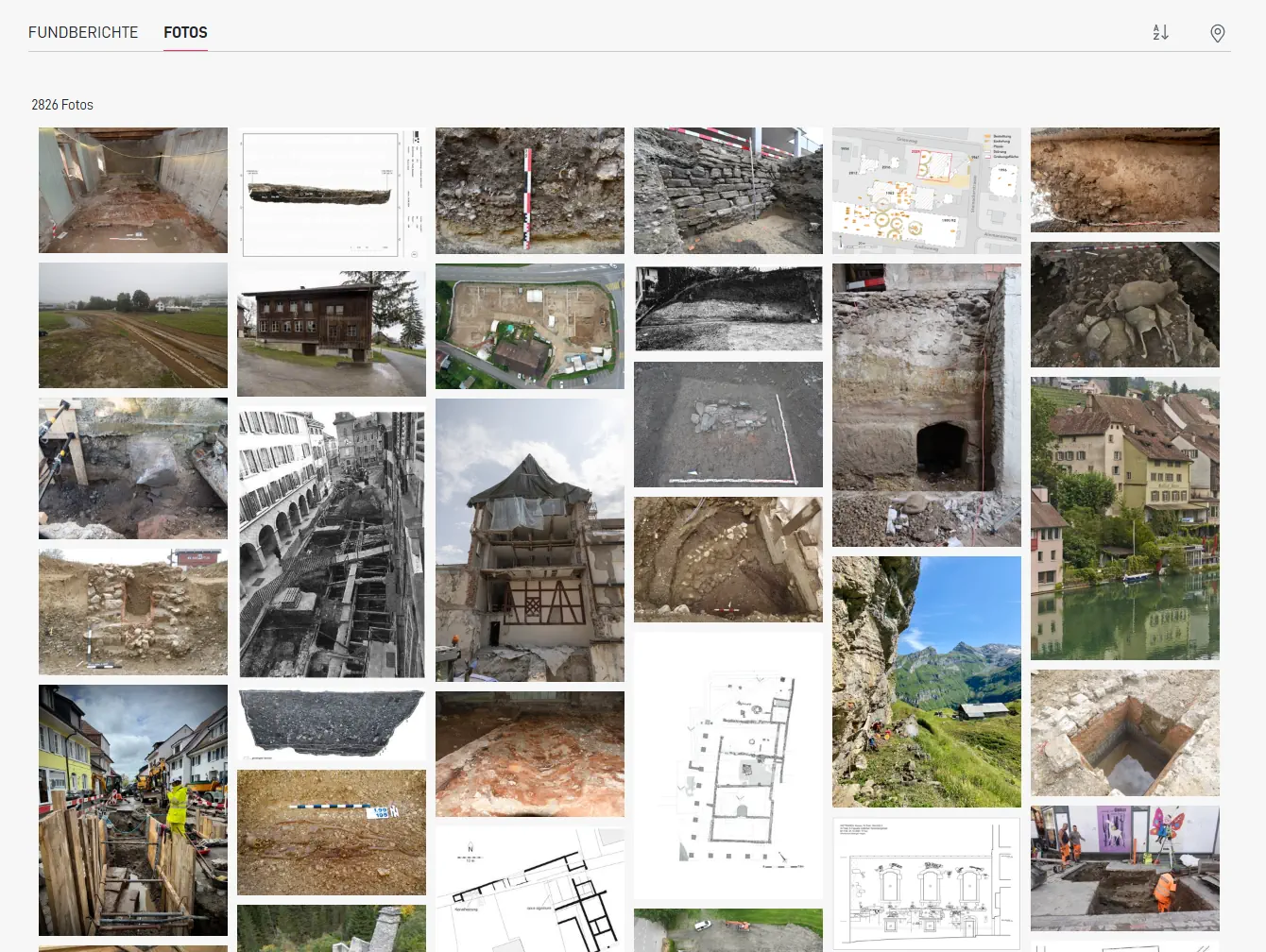

Your website, your branding.
Embed the portal into your own site via a simple HTML tag or iframe, aligned with your visual identity.
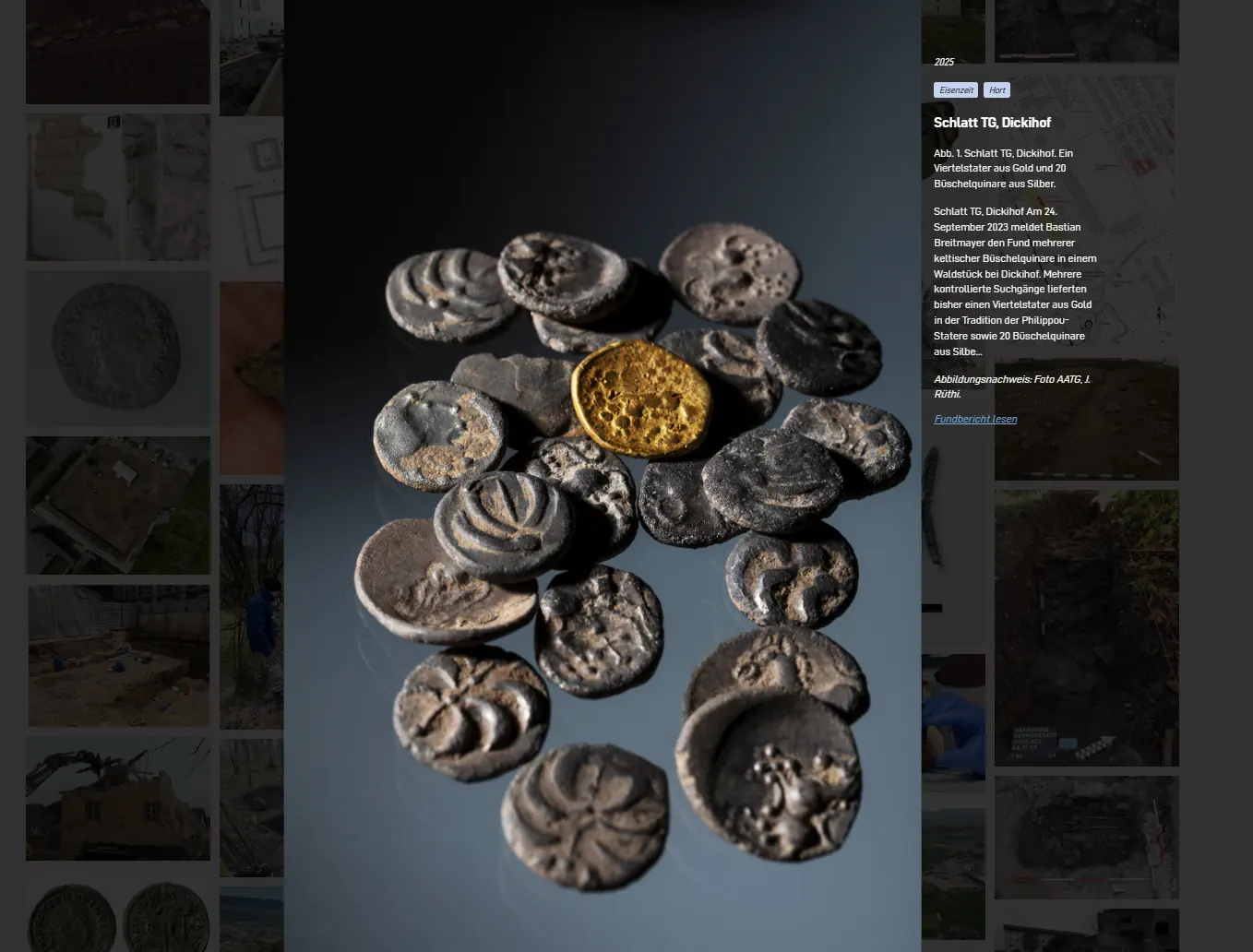

Built to be found and cited.
Metadata follows FAIR principles (Findable, Accessible, Interoperable, Reusable); publications receive persistent identifiers (ARK) and can be referenced and linked by archives and national or international portals.
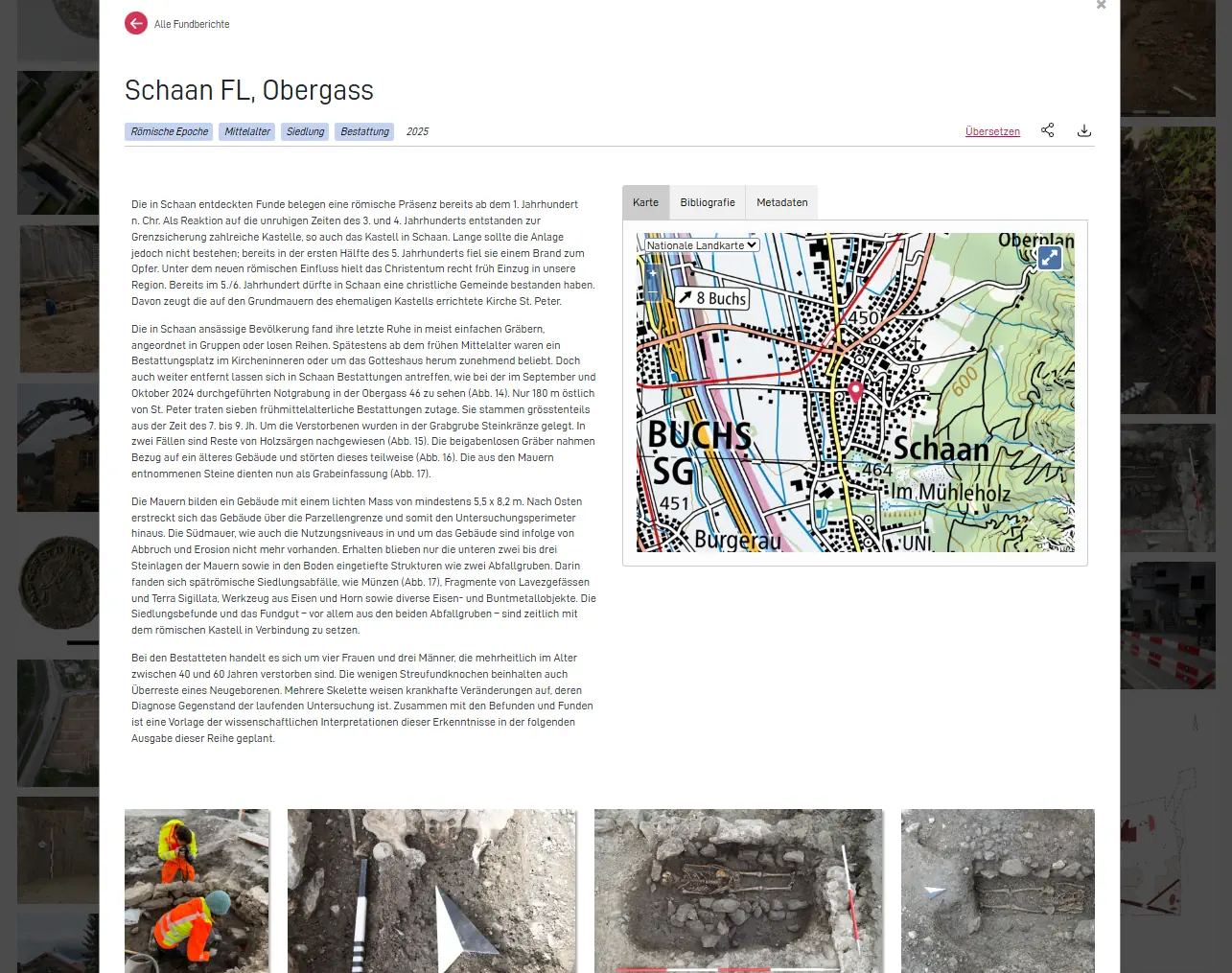

A modern reading experience.
Interactive maps, photo galleries, and full-text search on every chronicle and article.
Manage publications at scale
Beyond single documents, the module functions as an editorial dashboard for hundreds or thousands of publications.
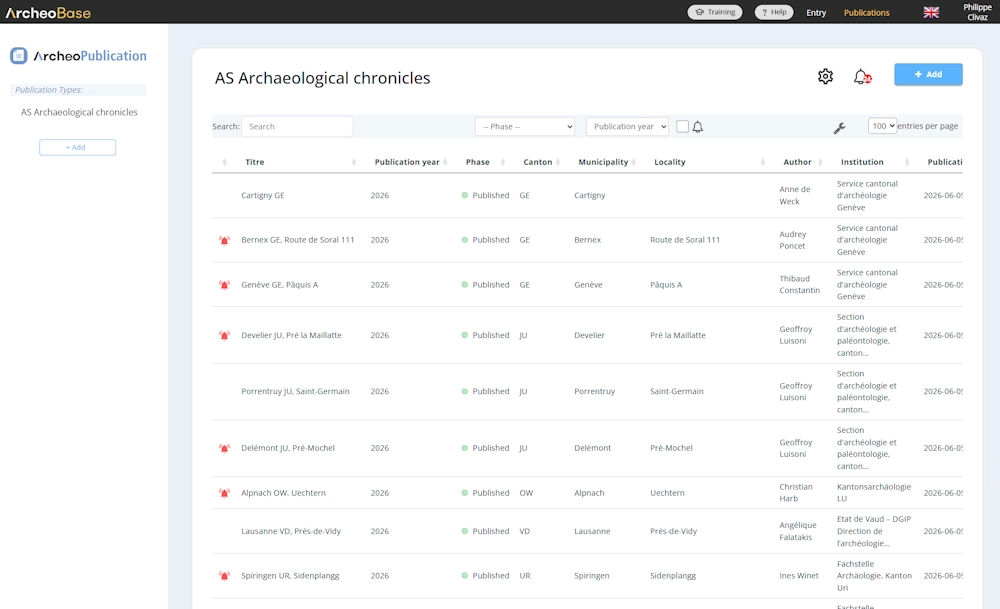

Configurable tables with customizable columns and saved display setups
Advanced filtering by year, workflow status, publication type, and more
PDF and Excel exports for reporting and archiving
Integrated in-app notifications, with optional email alerts
Maximum impact.
Transform your data into professional publications, accessible to the general public or reserved for experts. Your choice.

Controlled editorial management.
A complete author-reviewer-administrator workflow ensures scientific rigor and visual consistency.

Visibility and long-term preservation.
Indexed, reusable publications with persistent identifiers, disseminated in line with international standards.
6,900+ chronicles online,
18,000+ with retro-digitization under way.
Swiss Archaeology uses the Publication module to bring the national archaeological chronicles to the AS Portal. Every cantonal archaeological service in Switzerland publishes its yearly chronicles there: live, searchable, and open. Over 6,900 chronicles covering 1987 to date are online today; retro-digitization will bring the total to 18,000+, covering 1908 to the present.
A small revolution in the world of Swiss archaeology! Researchers can now find in a few clicks all medieval burials discovered in Switzerland, a task that would have taken several days with the paper yearbooks.
Lionel Pernet
President, Swiss Archaeology, Switzerland
A quantum leap for research: CHRONIQUES online allows multiple kinds of search: systematically by term, on a map or by photo. Researchers and the general public thus gain a tool that, alongside user-friendly open access, offers for the first time a powerful search instrument for a previously unmanageable volume of data.
Ellen Thiermann
General Secretary, Swiss Archaeology, Switzerland
What if your reports
were built from your data?
Free calibration to your methodology.
Free field test. No commitment.